The Difference Between ERP And CRM in The Business World
In today’s competitive business environment, organizations rely on software solutions to improve efficiency, streamline operations, and enhance customer relationships. Two of the most commonly used business systems are Customer Relationship Management (CRM) and Enterprise Resource Planning (ERP). While both systems help organizations achieve their goals, they serve different purposes and focus on different aspects of a business.
What is CRM?
Customer Relationship Management (CRM) is a software system designed to manage interactions between a company and its customers. The primary goal of CRM is to improve customer satisfaction, increase sales, and strengthen customer relationships.
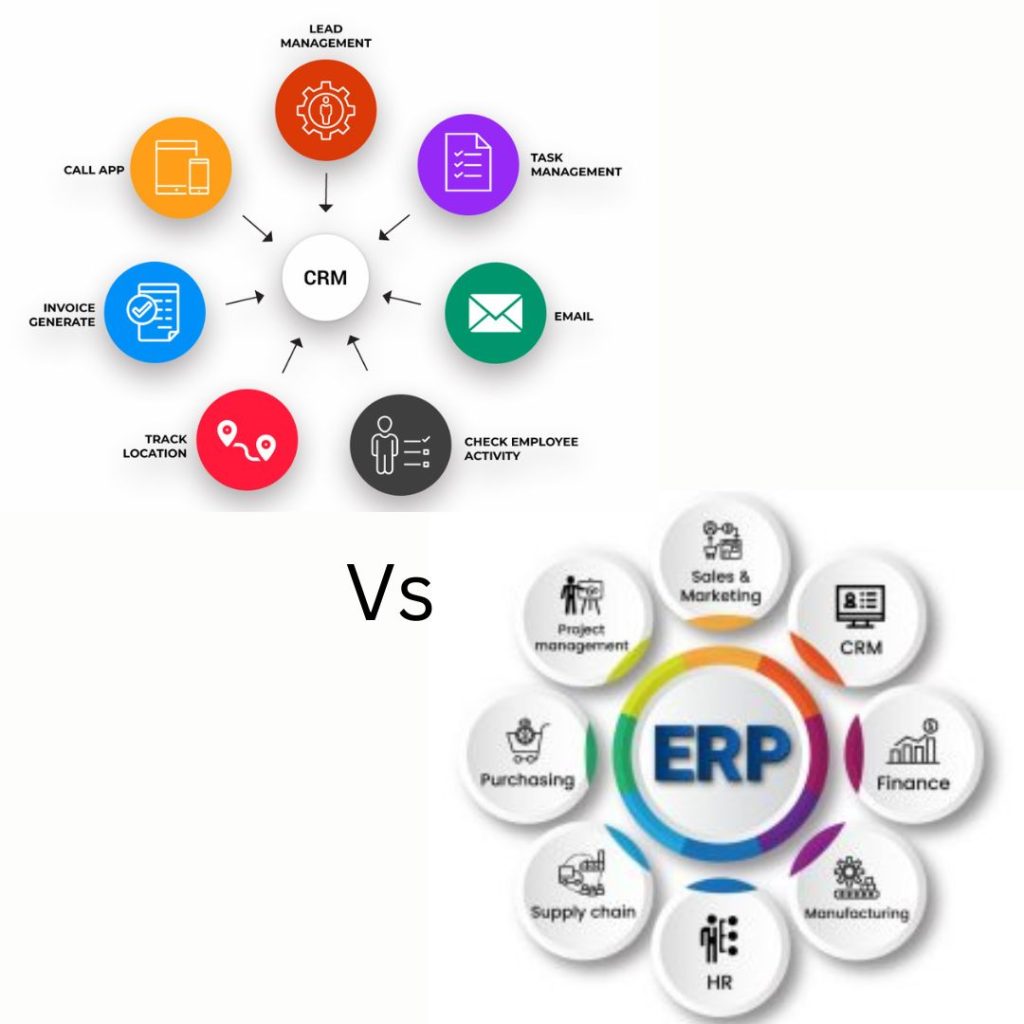
CRM systems help businesses store customer information, track communications, manage sales opportunities, and automate marketing activities. Sales and marketing teams commonly use CRM software to better understand customer needs and provide personalized services.
Key Features of CRM
- Customer contact management
- Sales pipeline tracking
- Lead management
- Marketing automation
- Customer support and service management
- Sales forecasting and reporting
Benefits of CRM
- Improved customer relationships
- Increased sales opportunities
- Better customer retention
- Enhanced communication between sales and customers
- More effective marketing campaigns
What is ERP?
Enterprise Resource Planning (ERP) is a business management software that integrates core business processes into a single system. ERP helps organizations manage departments such as finance, accounting, inventory, procurement, manufacturing, human resources, and supply chain operations.
The primary goal of ERP is to improve operational efficiency by providing a centralized database that allows different departments to access and share information in real time.
Key Features of ERP
- Financial management
- Inventory and warehouse management
- Procurement and purchasing
- Manufacturing and production planning
- Human resource management
- Supply chain management
- Business reporting and analytics
Benefits of ERP
- Centralized business data
- Improved operational efficiency
- Better decision-making through real-time insights
- Reduced manual processes
- Enhanced collaboration between departments
- Greater business scalability
Main Differences Between CRM and ERP
| Aspect | CRM | ERP |
|---|---|---|
| Primary Focus | Customers and sales | Internal business processes |
| Main Users | Sales, marketing, and customer service teams | Finance, HR, operations, procurement, and management |
| Purpose | Improve customer relationships and sales performance | Improve operational efficiency and resource management |
| Data Managed | Customer information, leads, and sales activities | Financial, inventory, production, and operational data |
| Business Goal | Increase revenue and customer satisfaction | Increase productivity and reduce operational costs |
Can CRM and ERP Work Together?
Yes. Many modern businesses integrate CRM and ERP systems to gain a complete view of their operations and customers.
For example, when a sales representative closes a deal in a CRM system, the information can automatically be transferred to the ERP system. The ERP system can then generate invoices, update inventory levels, and manage order fulfillment without requiring manual data entry.
This integration helps businesses improve efficiency while delivering a better customer experience.
Conclusion
CRM and ERP are both essential business management solutions, but they serve different purposes. CRM focuses on managing customer relationships, sales, and marketing activities, while ERP focuses on managing internal business operations such as finance, inventory, production, and human resources.
Organizations that understand the differences between CRM and ERP can make better technology decisions and select the right solution to support their growth. In many cases, combining both systems provides the greatest value by connecting customer-facing activities with back-office operations.